
What is Pelvic Floor Physical Therapy?
Pelvic floor physical therapy is a specialized form of physical therapy that evaluates and treats the muscles, nerves, and connective tissues that support the bladder, bowel, and reproductive organs. Dysfunction in these muscles can lead to pain, leakage, constipation, pelvic pressure, sexual dysfunction. Our goal is to identify the root cause of your symptoms and help you return to comfortable, confident daily activities through personalized, evidence-based care.
Pelvic Floor Health
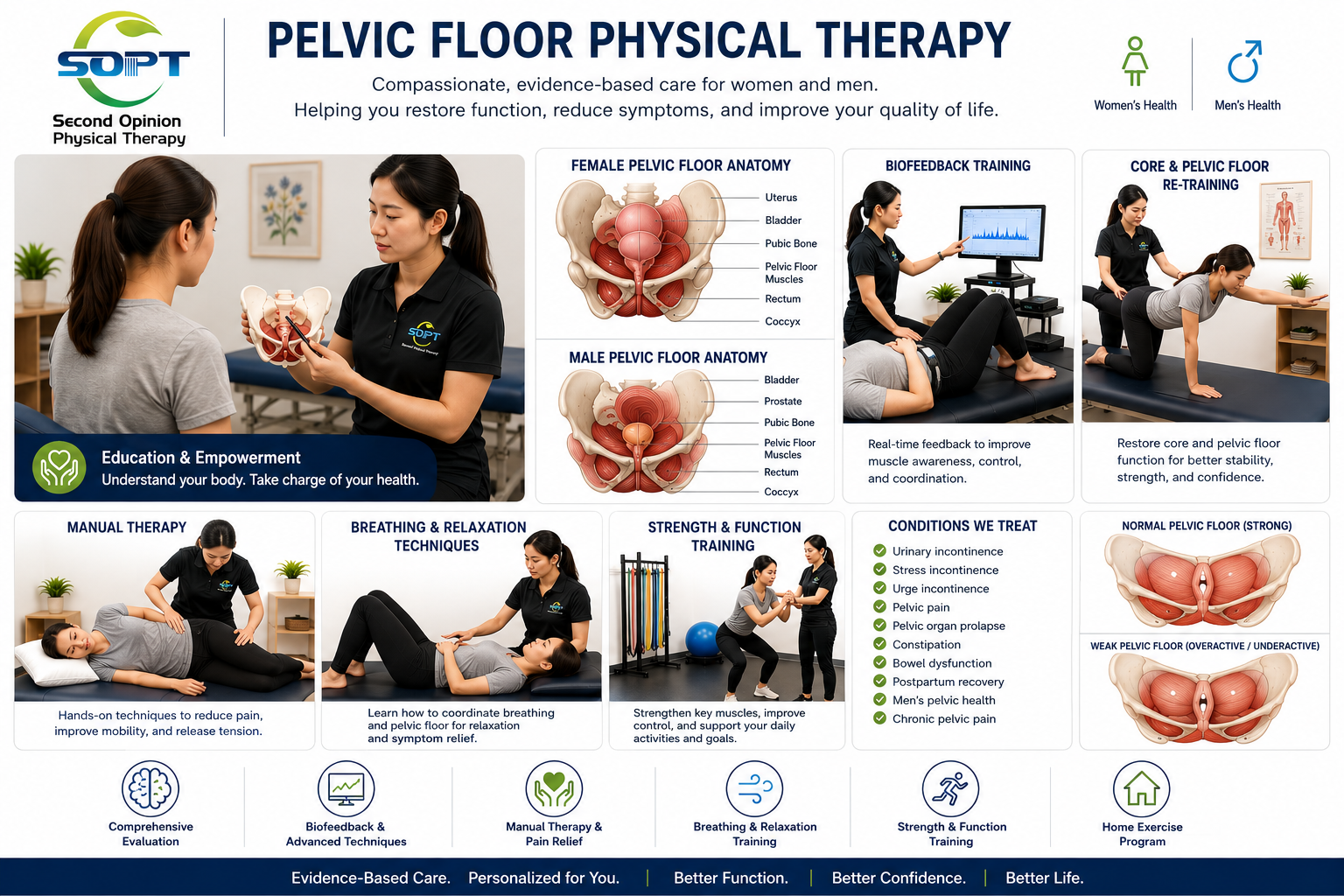
Conditions We Treat
Female Pelvic Floor Health
-
Pregnancy places increased stress on the body, especially the lower back, pelvis, and core.
We help manage:
Low back pain and pelvic girdle pain
Core and pelvic stability changes
Preparation for labor and delivery
Our goal is to keep you active, comfortable, and prepared for childbirth.
-
Recovery after delivery is different for every individual. We provide guided rehabilitation to help restore strength, function, and confidence.
Common postpartum concerns include:
DIASTASIS RECTI-Separation of the abdominal muscles that can affect core strength and stability.
URINARY INCONTINENCE—Leakage with coughing, sneezing, or exercise.
PELVIC ORGAN PROLAPSE —A feeling of pressure or heaviness in the pelvic area.
CLOGGED MILK DUCTS —Painful breast tissue blockage that may benefit from manual techniques and education.
SCARS & ADHESIONS— From C-section or perineal tearing, which may cause tightness, pain, or movement restriction.
-
Pelvic floor dysfunction can affect normal bladder and bowel function.
We treat:
Urinary urgency / overactive bladder
Urinary incontinence
Fecal incontinence
Constipation
Difficulty emptying the bladder
Post-void dribbling
Irritable bowel symptoms
Treatment focuses on improving coordination, control, and healthy habits
-
After pelvic or abdominal procedures, the body may experience weakness, tightness, or pain.
We help with:
Scar tissue and adhesions
Muscle dysfunction
Movement limitations
Pain management
-
Pelvic pain can significantly impact daily life but is often highly treatable.
Conditions we commonly treat:
PAIN WITH INTERCOURSE (DYSPAREUNIA)— Pain or discomfort during intimacy.
COCCYX (TAILBONE) PAIN —Pain with sitting or position changes.
ABDOMINAL & PELVIC PAIN— Pain related to muscle imbalance or core dysfunction.
PUBIC SYMPHYSIS PAIN—Pain at the front of the pelvis, often during pregnancy or postpartum.
VAGINISMUS—Involuntary muscle tightening that makes penetration difficult or painful.
VULVODYNIA / VESTIBULITIS—Chronic vulvar pain, burning, or irritation.
PUDENDAL NEURALGIA—Nerve-related pelvic pain, often worse with sitting.
ENDOMETRIOSIS & PCOS-RELATED PAIN—Pelvic pain associated with underlying medical conditions.
RECTAL PAIN / ANAL SPASM —Pain or tightness affecting bowel movements or sitting
-
We evaluate and treat symptoms related to pelvic floor prolapse and pelvic floor weakness, including:
Bladder prolapse (Cystocele)
Uterine prolapse
Rectocele
Pelvic heaviness or pressure
Vaginal bulging
Difficulty empty the bladder or bowel
Conservative management to improve support and function
Male Pelvic Floor Health
-
Pelvic floor dysfunction can affect men as well, impacting bladder, bowel, and pelvic muscle function. These conditions are often underdiagnosed but highly treatable with the right approach.
-
Pain in the pelvic region, lower abdomen, or testicles that may be constant or activity related
-
Discomfort associated with pelvic muscle tension or irritation.
-
Rehabilitation to improve bladder control, reduce pain, and restore function after surgery.
-
Urinary frequency and urgency
Hesitation or difficulty starting urine
Post-void dribbling
-
Constipation
Difficulty with bowel movements
Pediatric Pelvic Floor Therapy
-
Pelvic floor therapy can help children who are experiencing difficulty with bladder or bowel control.
Treatment is gentle, age-appropriate, and focused on education, coordination, and healthy habits.
These conditions are common in children and can often be improved with the right guidance and treatment.
Early support can make a big difference in long-term outcomes
-
Difficulty passing stool or withholding behaviors.
-
Accidental leakage of stool.
-
Nighttime bladder control challenges
-
Accidental urine leakage during the day.
-
Frequent or sudden urges to urinate.
-
Difficulty coordinating bladder emptying
-
Pain related to bowel or bladder dysfunction.
What to expect
A comprehensive one-on-one evaluation
Discussion of your symptoms and medical history
Assessment of posture, breathing, core, hip, lumbar and pelvic floor function
Internal pelvic floor examination (only with your informed consent and when clinically appropriate)
A personalized treatment plan
Home exercise program
-
Pelvic floor physical therapy (PFPT) has been recognized and supported for its effectiveness in managing a variety of pelvic floor dysfunction. Research highlights its role in treating conditions such as urinary incontinence, pelvic pain, bowel dysfunction, and sexual health issues.
PFPS offers a non-invasive, personalized treatment option that can improve quality of life, and overall pelvic health.
-
Your first appointment includes a comprehensive one-on-one evaluation. We will discuss your symptoms, medical history, daily activities, and treatment goals. Your evaluation may include assessment of posture, breathing, core muscles, hip, lumbar spine, and pelvic floor function.
If clinically appropriate, an internal pelvic floor examination may be recommended, but it is always your choice and performed only with your informed consent. Together, we will develop a personalized treatment plan.
-
Maybe. Our pelvic floor specialists are certified to perform internal vaginal and/or rectal exams only if you consent and are clinically necessary. The internal exam, when indicated, is performed to evaluate the strength, coordination, endurance and relaxation of the pelvic floor muscles. There are no stirrups nor speculums. Internal pelvic health assessments include a single, lubricated digit insertion. Prior to the exam, your therapist will explain all aspects of the procedure, including how and why it will help you, and will ask for your consent. Your comfort and privacy are always our priority.
-
Yes. Professionally, we are still able to treat you at any point in your cycle. Internal therapy is not necessary at each session. If an internal assessment or treatment is planned and you would prefer not to have it performed during your period, we can modify your treatment session to focus on education, exercises, manual therapy, or other aspects of your rehabilitation.
-
PFPF should not be painful. Some techniques may reproduce familiar symptoms briefly as part of the evaluation or treatment process, but your therapist will continuously monitor your comfort level an adjust treatment accordingly. We encourage you to communicate any discomfort throughout your session, so treatment remains comfortable.
-
Pelvic floor biofeedback is a non-invasive assessment and treatment tool that provides real-time visual feedback to help you understand how your pelvic floor muscles are functioning.
When appropriate, we may also use rehabilitative ultrasound imaging to visualize the pelvic floor and deep core muscles during movement. These tools can improve muscle awareness, coordination, and control, making rehabilitation more effective.
-
Yes. We offer intra-rectal balloon training (balloon expulsion training) when clinically appropriate for patients with certain bowel disorders.
Balloon training is a specialized pelvic floor rehabilitation technique used to improve rectal sensation, pelvic floor muscle coordination, and the ability to relax and empty the bowels effectively. It may be recommended for conditions such as chronic constipation, dyssynergic defecation, and some cases of fecal incontinence.
This treatment is performed only when indicated, with your informed consent, in a private and respectful environment. Your physical therapist will determine whether balloon training is appropriate based on your evaluation and individual treatment goals.
-
Absolutely. You are welcome to have a spouse, partner, parent, guardian, or other support person accompany you during your evaluation or treatment. If you prefer complete privacy, we fully respect that as well.
-
Yes. We understand that pelvic floor concerns are personal and sometimes difficult to discuss. All evaluations and treatment are provided in a private treatment room.
Your therapist will explain every step of the examination and treatment, answer your questions, and obtain your consent before performing any procedure.
-
Many women can safely begin pelvic floor physical therapy within the first few weeks after delivery, depending on their recovery and their healthcare provider’s recommendations.
We tailor treatment to your stage of healing and individual needs.
FAQs
Regain confidence and improve your quality of life.
Schedule your evaluation today and start your recovery.