
Vestibular Rehabilitation
What is Vestibular Rehabilitation?
The vestibular system, located in your inner ear and brain, helps control your balance, movement and vision. When it is not working properly, you may experience dizziness, vertigo (a spinning sensation), imbalance, motion sensitivity, blurred vision with movement or difficulty walking.
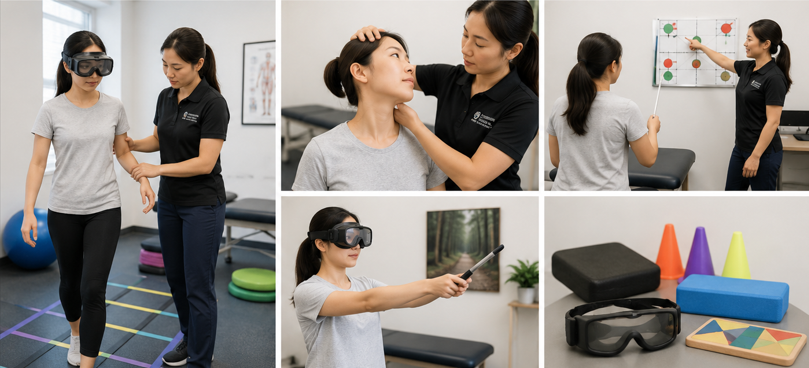
Vestibular rehabilitation is a specialized program of physical therapy to reduce these symptoms and improve your balance, stability and confidence. Through individualize program and evidence-based treatment, we help retrain your brain and body to compensate for vestibular dysfunction, so you can safely return to you daily activities.
-
Benign Paroxysmal Positional Vertigo (BPPV) is one of the most common causes of dizziness. It often feels like the room is spinning when you roll in bed, look up, or bend over.
This happens when tiny crystals in your inner ear move out of place. The good news is that BPPV can usually be treated quickly and effectively with specific repositioning maneuvers performed in the clinic
-
Vestibular hypofunction occurs when one or both inner ears are not working properly. This can lead to symptoms such as:
Dizziness or lightheadedness
Blurred vision with head movement
Difficulty walking, especially in busy environments
Treatment focuses on retraining your brain and body through targeted exercises to improve balance, stability, and visual control.
-
Not all dizziness feels like spinning. Many people describe it as:
Feeling “off” or unsteady
Floating or lightheaded sensation
Difficulty focusing or walking straight
We perform a thorough evaluation to identify the root cause and create a personalized plan to restore your balance and confidence..
-
Balance problems can increase the risk of falls, especially as we age or after injury.
Our therapy focuses on:
Improving strength and coordination
Enhancing balance reaction
Reducing fall risk in daily activities
The goal is to help you move safely and confidently in your environment.
-
Visual vertigo occurs when busy environments (like grocery stores, crowds, or scrolling screens) trigger dizziness or discomfort.
This happens when your brain becomes overly reliant on visual input. Treatment helps your body better integrate visual, inner ear, and body signals so you can tolerate these environments again.
-
PPPD is a chronic form of dizziness that often develops after an initial vestibular issue, illness, or stressful event.
Symptoms may include:
Persistent dizziness or unsteadiness
Sensitivity to motion or visual environments
Symptoms that worsen with standing or walking
Treatment focuses on gradually retraining your system to reduce sensitivity and improve tolerance to movement and daily activities.
-
Vestibular migraine can cause dizziness, imbalance, or motion sensitivity with or without a headache.
Common symptoms include:
Episodes of dizziness or vertigo
Sensitivity to light and motion
Headaches or pressure
Treatment includes a combination of movement-based therapy, symptom management strategies, and coordination with your physician when needed.
Conditions We Treat
Our Treatment Approach
Comprehensive vestibular evaluation
Canalith repositioning
Gaze stabilization
Habituation exercises
Balance training
Fall prevention
Home exercise program
-
Yes. Physical therapy is one of the most effective treatments for many types of vertigo caused by inner ear disorders, especially Benign Paroxysmal Positional Vertigo (BPPV). After a comprehensive vestibular evaluation, your physical therapist will identify the cause of your dizziness and develop a personalized treatment plan. Treatment may include repositioning maneuvers, balance training, gaze stabilization exercises, and movement retraining to reduce dizziness, improve balance, and help you safely return to your daily activities.
-
Every patient is different. Some conditions, such as BPPV, may improve in just one or two visits, while others require several weeks of rehabilitation. Your therapist will discuss your expected plan of care after your evaluation.
-
Georgia is a direct access state, meaning you can see a physical therapist without a physician referral in many cases. We will let you know if a referral is needed based on your insurance plan.
-
Please wear comfortable clothing and avoid eating a large meal before your appointment. A light meal or snack is recommended. During the evaluation, we may perform vestibular testing or canalith repositioning maneuvers (for BPPV), which can temporarily increase dizziness or nausea. Some patients may experience vomiting or feel unwell for a short time after treatment. While most people are able to drive home safely, if you have severe dizziness or are concerned about your symptoms, we recommend arranging for a family member or friend to drive you home. These temporary symptoms are a normal response for some patients and typically improve as your vestibular system recovers.
-
Your first appointment includes a detailed discussion of your symptoms and medical history, followed by a comprehensive vestibular and balance evaluation. Depending on your condition, treatment may begin during the same visit. You will also receive education and, if appropriate, a personalized home exercise program.
FAQs
Don’t let dizziness keep you from living life confidently.
Schedule your vestibular evaluation today and start your recovery.