
Concussion Rehabilitation

What is Concussion?
A concussion is a mild traumatic brain injury that can occur after a blow to the head or body. It can affect how your brain functions, leading to symptoms that impact your daily life, work, or sports performance.
Symptoms may include:
Headaches
Dizziness or balance problems
Difficulty concentrating or “brain fog”
Sensitivity to light or noise
Fatigue
Neck pain
Sport-Related Concussion
Concussions commonly occur during sports or physical activity. Even mild injuries can lead to ongoing symptoms if not properly managed.
We help athletes safely recover and guide a structured return-to-sport progression, focusing on:
Symptom resolution
Balance and coordination
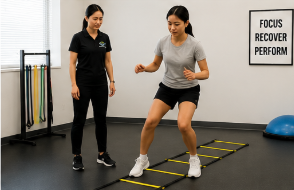
Reaction time and movement control
Non-Sport Related Concussion
Concussions can also happen outside of sports, such as:
Car accidents
Falls
Work-related injuries
Treatment focuses on helping you return to normal daily activities, including work,
driving, and screen use, without triggering symptoms.
How We Treat Concussions
Every concussion is different. Your treatment plan is personalized and may include:
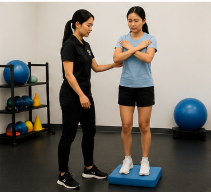
Vestibular and balance therapy
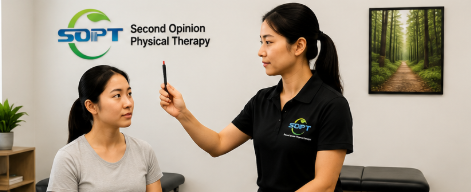
Eye movement and visual tracking exercises
Gradual return to activity
Cervical spine (neck) treatment
Education and symptom management strategies
FAQs
-
Current evidence suggests that early, guided rehabilitation can help many people recover more quickly. After an evaluation, we will determine the most appropriate treatment plan based on your symptoms and stage of recovery.
-
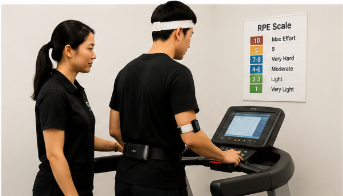
Your therapist will review your medical history, mechanism of injury, and current symptoms. The evaluation may include assessment of balance, eye movements, vestibular function, neck mobility, exertional tolerance, and cognitive symptoms. Based on the findings, an individualized treatment plan will be developed.
-
Some assessment tests or exercises may temporarily increase symptoms as part of the rehabilitation process. Your therapist carefully monitors your response and adjusts treatment to promote recovery while avoiding excessive symptom flare-ups.
-
Recovery varies from person to person. Many individuals recover within a few weeks, while others experience symptoms for a longer period. Factors such as injury severity, previous concussion history, migraine, vestibular dysfunction, and neck injuries can influence recovery.
-
Yes. We provide evidence-based return-to-sport progression, including symptom monitoring, exertional testing, balance assessment, and sport-specific recommendations to help athletes safely return to activity.
-
Yes. We provide guidance for a gradual return to school, work, and daily activities while minimizing symptom exacerbation. Recommendations may include activity modifications and pacing strategies.
Recover Stronger. Return with Confidence.
Whether your concussion happened during sports, a fall, a motor vehicle accident, or another injury, our experienced physical therapist perform comprehensive concussion evaluation, provides personalized, evidence based rehabilitation to help you safely return to school, work, sports, and everyday life.